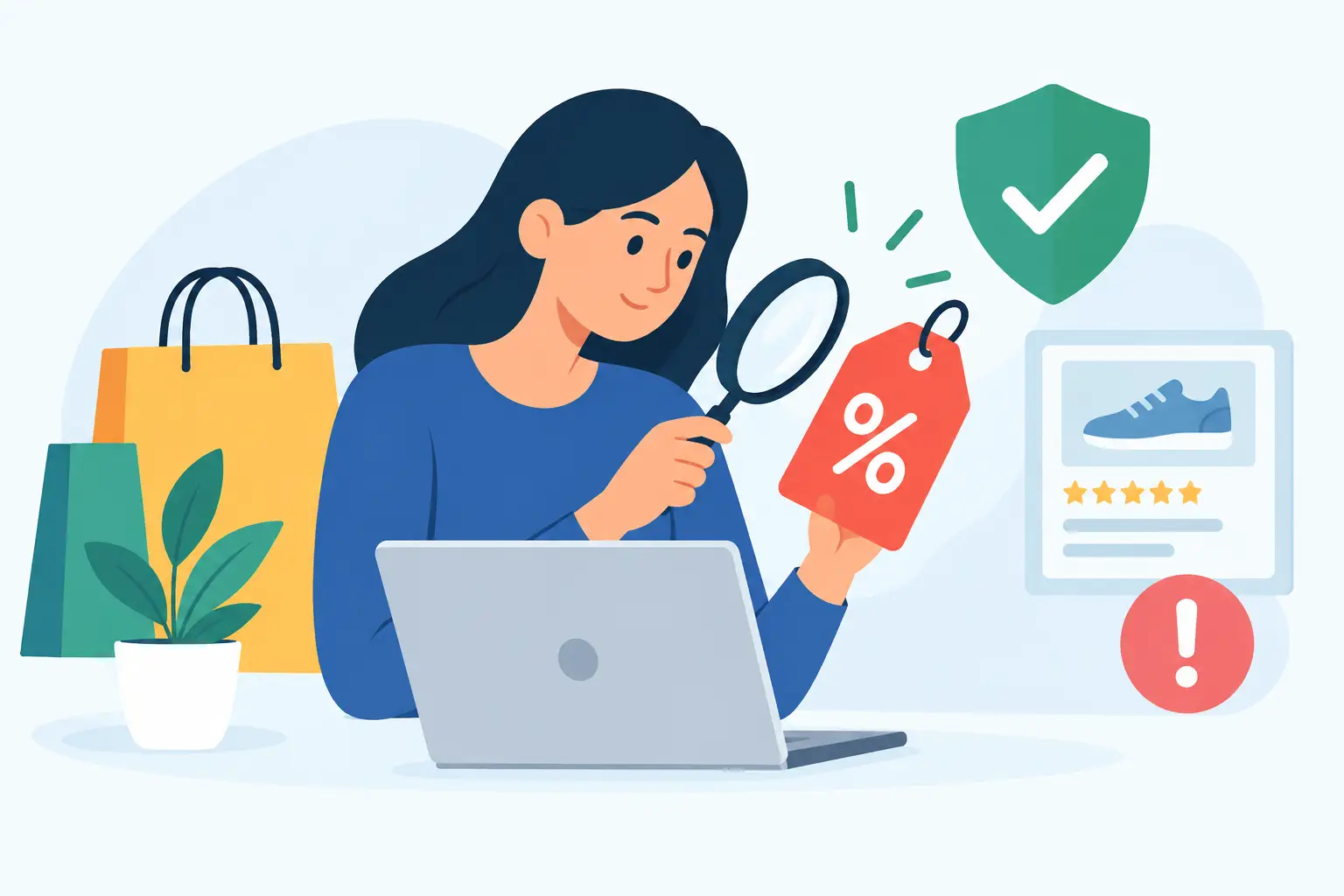
A bath towel listed at $9.99 can be a smart household purchase. The same towel listed at $9.99 after a dramatic “70% off” banner may still be a smart purchase, but the bigger question is whether the original price means anything. Are online discounts genuine? Often, yes. But a percentage-off claim and a genuinely low final price are not always the same thing.
For practical household shopping, the number that matters most is what you pay to get a useful product delivered to your door. That means looking beyond the crossed-out price, checking the item details, and making sure shipping, returns, and seller reliability do not erase the savings.
Are Online Discounts Genuine? Start With the Final Price
A discount is real when the price is meaningfully lower than what comparable products normally sell for, and when there are no surprise costs attached. It does not have to be the lowest price ever offered anywhere to be a fair deal. Inventory changes, brands differ, and a retailer may include free delivery while another adds a shipping fee at checkout.
Start with the final delivered price. Add the product price, any required shipping charge, handling fee, and sales tax. Then compare that number with similar items from reputable retailers. For replenishment items such as towels, oral-care supplies, lighters, or utility scissors, comparing the cost per item or per usable unit is usually more useful than comparing a large discount percentage.
For example, a four-pack of refillable lighters may look cheaper than a two-pack. If the larger pack has a lower cost per lighter and you will use them, it is likely the better value. If you only need one lighter and the extra items will sit unused, the smaller purchase can be the better deal despite the higher per-unit cost.
Free shipping deserves the same practical review. It is a real customer benefit when it is clearly included rather than offset by an inflated item price. Compare the delivered total, not just the sticker price. A $12 item with free shipping may cost less than a $8 item with a $7 delivery charge.
Why a Large Percentage Off Can Be Misleading
Retailers can calculate discounts from several reference prices: a manufacturer’s suggested retail price, a previous selling price, a comparable market price, or a limited-time promotional price. Those references are not automatically false, but they are not equally useful to a shopper.
A suggested retail price can be high even when few customers regularly pay it. A previous price can be legitimate but may have been in effect only briefly. This is why “was $40, now $15” should prompt a quick comparison, especially for generic or widely available merchandise.
The final sale price may still be excellent. The point is not to dismiss every sale label. It is to avoid treating the percentage as proof. A smaller, clearly priced discount on a useful product is often more trustworthy than an eye-catching 80% off claim with vague specifications, expensive shipping, or a difficult return process.
Price history can help for higher-cost purchases, but it is not necessary for every order. For everyday essentials, a quick search for the same brand, model, size, or package count is usually enough to establish a reasonable range. If the product is private-label or bundled differently, compare materials, dimensions, included pieces, and shipping terms instead of relying on the product name alone.
Check Whether You Are Comparing Like for Like
Online listings can look almost identical while offering very different products. A hotel-style pillow may have a similar photo and name across several stores, yet vary in fill material, dimensions, cover fabric, loft, and whether one or two pillows are included. Comparing only the headline price can lead to a bad conclusion.
Read the specifications before deciding a deal is genuine. For household textiles, check size, quantity, fabric content, and care instructions. For personal-care products, verify the count, size, expiration information where relevant, and whether the listing is for a single item or a multipack. For utility supplies, look for compatible uses, safety details, and included accessories.
Product photos are helpful, but the written details carry more weight. A clear listing should tell you what you are receiving without forcing you to guess. If the description is thin, the product title is overly broad, or the package quantity is unclear, compare cautiously or choose a retailer with more complete information.
Look at the Seller, Not Just the Sale Banner
A legitimate discount should come with a legitimate buying experience. Before placing an order from an unfamiliar online retailer, review the basics: clear contact information, secure checkout options, stated shipping expectations, return terms, and straightforward product descriptions.
Secure payment methods add protection, but they do not replace common sense. A checkout page should clearly show the order total before payment. Be cautious when a seller pressures you to pay by unusual methods, hides fees until the last step, or makes it hard to find policy details.
Customer reviews can be useful when read carefully. Look for patterns about order accuracy, delivery, product quality, and how problems were handled. A few negative reviews are normal for almost any retailer. Repeated complaints about missing orders, unauthorized charges, or unresponsive customer service are a stronger warning sign than one unhappy review.
For repeat household purchases, a customer account can also save time and reduce ordering mistakes. Being able to review previous orders, confirm what worked, and reorder the same item is more valuable than chasing a one-time price that is difficult to verify later.
Watch for Costs That Change the Deal
Some promotions are genuine but come with conditions that may not fit your order. A buy-one-get-one offer is only a good value if you need two items. A coupon that requires a minimum spend can encourage buying more than planned. A subscription discount may be worthwhile for products you use regularly, but not for something you may forget to cancel.
Pay attention to four common deal changers:
- Shipping charges that appear after a coupon is applied
- Minimum purchase requirements for free delivery or promotional pricing
- Final-sale terms that limit returns or exchanges
- Automatic subscription, membership, or recurring billing terms
None of these practices automatically makes a discount dishonest. They simply affect the true cost and flexibility of the order. Clear terms allow you to decide whether the offer works for you. Hidden or confusing terms are a reason to slow down.
A Better Way to Judge Everyday Online Deals
For low-cost essentials, it is easy to spend more time researching than the possible savings justify. Set a simple standard before you shop: Is this the right product, is the delivered price competitive, and is the retailer one you are comfortable ordering from? If the answer is yes, you do not need to prove that the item is the lowest price in the country.
This approach also prevents false urgency from driving your cart. Countdown timers, limited-stock labels, and “today only” language can be accurate, particularly when inventory is genuinely limited. Still, they should not replace a basic price and product check. If an item is useful but you are uncertain, save the details, compare later, and buy when the value is clear.
The Sale Central follows the model many budget-conscious shoppers want: practical products, wholesale-oriented pricing without a membership requirement, and free shipping on every order. That combination can make comparing delivered prices faster, especially when you are restocking items you already know you need.
A genuine online discount should make your purchase simpler, not create more work after checkout. Focus on the item, the delivered cost, and the seller’s clarity. When those three line up, a sale price is not just a marketing number - it is money kept in your household budget.