A first aid kit only helps if it is close by when a problem happens. That is why the best compact first aid kits are not necessarily the ones packed with the most supplies. They are the kits that fit in your glove box, backpack, desk drawer, or kitchen cabinet and cover the minor injuries people actually deal with.
For most households, a compact kit is a practical backup for cuts, blisters, splinters, insect bites, and small burns. It is not a replacement for professional medical care or a full emergency kit. But it can save a trip to the store, make a road trip less stressful, and help you handle a small problem promptly.
What Makes a Compact First Aid Kit Worth Buying?
Small first aid kits are easy to compare by item count, but that number can be misleading. A kit advertised with 100 pieces may contain many small adhesive bandages and very little else. A better choice has useful variety, organized packaging, and supplies you can recognize and replace.
Start with the case. A good compact case should close securely, resist light moisture, and make supplies easy to find. Soft zip pouches work well in backpacks, luggage, and diaper bags because they take up little space. Hard plastic cases are often a better choice for a car, boat, garage, or kitchen because they protect the contents from being crushed.
The right size depends on where it will live. A pocket-size pouch is convenient for a day hike but may only treat one or two minor incidents. A larger travel or car kit gives you more bandage sizes, cleaning supplies, and tools without becoming bulky. Buying the smallest possible kit only makes sense if you will truly carry it.
The Supplies to Look For in the Best Compact First Aid Kits
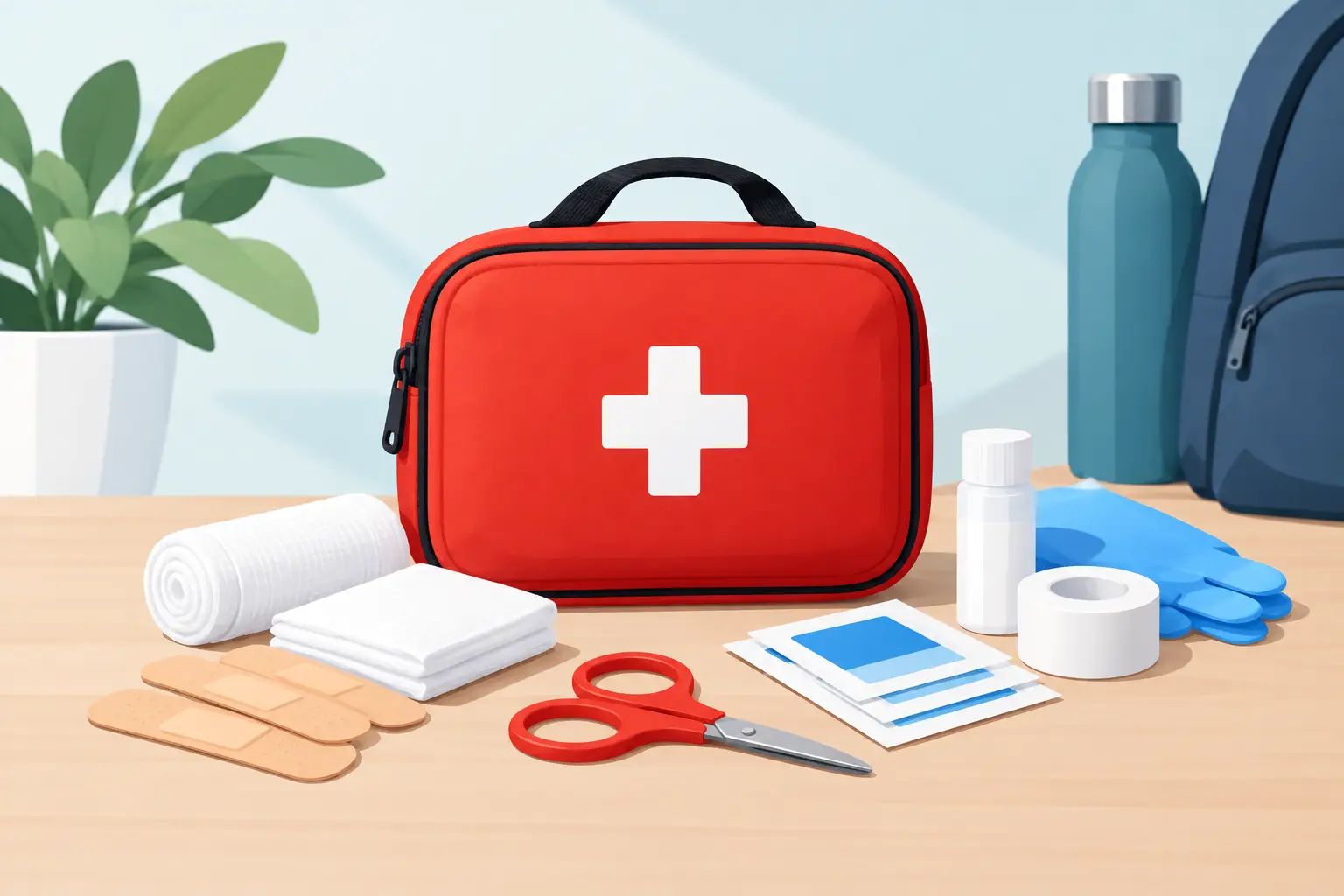
A practical kit should cover cleaning, protecting, and handling a few common discomforts. You do not need every medical supply available, but a few basics make a meaningful difference.
Look for a balanced selection of these items:
- Adhesive bandages in more than one size, including fingertip or knuckle bandages when possible
- Sterile gauze pads and medical tape for cuts that need more coverage than a standard bandage
- Antiseptic wipes for cleaning small cuts and scrapes before covering them
- Tweezers and small scissors for splinters, tape, gauze, or clothing around an injury
- Disposable gloves, especially for a household, vehicle, or workplace kit used by more than one person
- Burn gel, blister pads, cold packs, or itch relief products when the kit is intended for outdoor use
A few items deserve extra attention. Tweezers should have aligned tips that can grip a small splinter. Scissors should be sturdy enough to cut tape and gauze. If a kit includes an instant cold pack, check its expiration date and replace it after use. These are simple details, but they separate a kit that is ready from one that is just taking up space.
Medication is a personal decision. Some compact kits include pain relievers, antihistamines, or stomach relief tablets. They can be useful for travel, but they add expiration dates and may not work for every member of the household. If you add medication, keep it in its original labeled packaging and review it regularly. Never assume a prepacked kit contains medication you rely on.
Choose a Kit for Where You Will Use It
The best kit for a family kitchen is different from the best kit for a weekend trail. Matching the kit to the location keeps you from paying for supplies that will not get used while missing the ones you need.
For the home
A home kit should be easy to reach, but stored away from heat, humidity, and young children. A medium compact case works well because it can hold several gauze pads, a wider assortment of bandages, gloves, tape, and basic tools. Consider keeping it near the kitchen or laundry area, where minor cuts and burns are common.
If someone in your household has allergies, diabetes, or another ongoing health need, keep condition-specific supplies separate but nearby. A general first aid kit should remain simple enough for anyone in the home to use quickly.
For the car
A car kit needs a durable case and supplies that can tolerate being stored in a confined space. Heat and cold can damage medications, adhesive products, and instant cold packs, so check the contents seasonally. Keep the kit in a door compartment, center console, or trunk location that is easy to reach.
For road trips, add a few extras outside the kit: bottled water, a flashlight, a phone charging cable, and any personal medications. A first aid kit handles minor injuries. Those other items help when a delay keeps you on the road longer than planned.
For travel and day trips
Travel kits should be light, flat, and easy to inspect. Bandages, antiseptic wipes, blister care, tweezers, and a few gauze pads are usually more useful than a large case with specialty supplies. If you are flying, check current carry-on rules before packing tools or liquids.
A travel kit also benefits from personalization. Families with children may want more bandages and wipes. Hikers may prioritize blister pads, insect bite relief, and an elastic wrap. Beach and pool trips make waterproof bandages and burn care more useful.
For work, school, or a daily bag
For a desk, locker, or tote bag, choose a slim pouch with basics for minor cuts, headaches, and blisters. The goal is quick access, not full medical coverage. A compact pouch also makes it easier to restock after you use an item instead of waiting until the whole kit is empty.
Avoid These Common Buying Mistakes
The first mistake is choosing based only on the number of pieces. Ten individually wrapped alcohol pads may be useful, but they should not outweigh missing gauze, tape, or gloves. Read the item list and ask whether it handles a realistic situation, such as a scraped knee, a kitchen cut, or a splinter.
The second mistake is buying a kit with too many specialty items for a simple need. A large trauma-focused kit can be appropriate for remote outdoor activities or trained users, but it may be unnecessary for a condo, office, or commuter car. More equipment can make a kit harder to organize and more expensive to replenish.
The third is treating a prepacked kit as permanently ready. Bandage adhesive weakens over time. Wipes dry out. Medication and cold packs expire. Once or twice a year, open the case, remove damaged items, and replace what you used. This takes only a few minutes and prevents surprises when you need the kit.
Finally, do not store a first aid kit where it is hard to access. A perfectly stocked kit in a high closet or a packed storage bin is less useful than a modest kit in a sensible location. Let everyone in the household know where it is kept.
How to Build Up a Basic Kit Without Overspending
A ready-made kit is often the easiest starting point because the case and core supplies are already organized. After that, add only what matches your routine. This approach avoids buying a large assortment of items that will expire unused.
Keep a short restock note inside the case. When you use the last large bandage, antiseptic wipe, or gauze pad, write it down immediately. Replacing a few essentials during regular household shopping is more affordable than rebuilding a kit from scratch after an emergency.
Value matters here, but so does consistency. A lower-priced kit is a good buy when it includes usable basics, has a case you will keep, and makes replacement simple. The Sale Central approach to everyday essentials is built around that same practical idea: buy useful items at a fair price, with free shipping and no membership requirement.
A Small Kit Works Best When You Know Its Limits
Compact first aid kits are meant for minor injuries and short-term care. Seek professional help for severe bleeding, trouble breathing, loss of consciousness, suspected broken bones, serious burns, deep wounds, signs of infection, or allergic reactions involving swelling or breathing difficulty. When in doubt, contact a medical professional or emergency services.
For ordinary cuts, scrapes, blisters, and splinters, the right compact kit can turn an inconvenient moment into a manageable one. Choose a size you will keep nearby, check the actual supplies instead of the package count, and set a reminder to restock it. The best kit is the one that is ready before you need it.