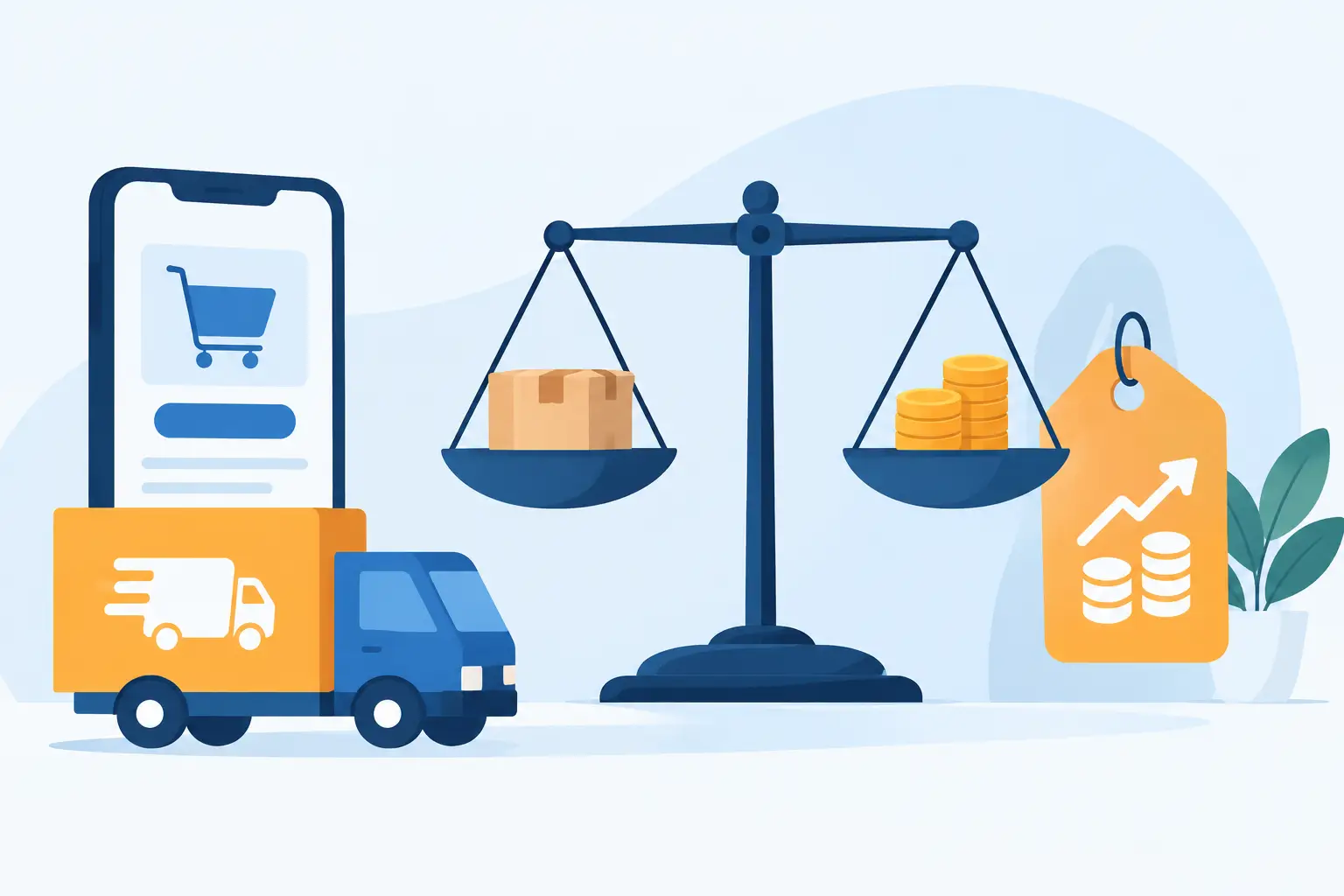
A $12 item with “free delivery” can be a better deal than a $9 item plus a $7 shipping charge. It can also be the opposite. So, does free delivery increase prices? Sometimes, but not automatically. The only number that matters to your budget is the complete cost to get the product you need to your door.
For shoppers restocking towels, oral-care items, utility supplies, or other household basics, shipping should not turn a simple purchase into a checkout surprise. Understanding how delivery is priced makes it easier to compare offers quickly and buy with confidence.
Does Free Delivery Increase Prices? The Short Answer
Delivery is never actually free for the retailer. A package still has to be picked, packed, labeled, and carried to its destination. The question is how the retailer covers those costs. Some add a shipping fee at checkout. Others include part of the cost in product pricing, use their operating margin to absorb it, or spread it across their overall order volume.
That means a higher listed price does not prove that free delivery is inflated, and a lower listed price does not prove an item is a better value. A retailer with efficient fulfillment, favorable carrier rates, a focused catalog, and direct supplier relationships may be able to offer free shipping without raising every item beyond a fair market price.
The practical comparison is simple: look at the final total for the same or similar item, including delivery, required membership fees, order minimums, and any charges that appear late in checkout. If the delivered total is lower, free delivery is doing its job.
How Retailers Pay for Shipping
Shipping economics vary widely by product, order size, and business model. A lightweight pack of refillable lighters is less expensive to ship than a bulky pillow set. A retailer that ships thousands of orders can also negotiate differently than a small seller sending occasional packages.
Product pricing may include part of the delivery cost
Some retailers build an estimated share of fulfillment and delivery into each item's price. This approach keeps checkout simple because the shopper sees one clear product price and does not have to calculate a separate shipping charge.
That can be fair value when the listed price remains competitive. It becomes less appealing when a low-cost, easy-to-ship product carries a noticeably higher price than comparable offers, with no added product quality, service, or convenience to justify it.
Shipping may be covered by the order as a whole
Retailers can also offset free shipping through the combined value of an order. This is why some stores set a minimum purchase amount for free delivery. The margin from several items helps cover the cost of sending one package.
Minimums are not always a bad deal, but they can lead to unnecessary spending. If you only need one item, adding products you would not otherwise buy just to qualify for shipping is not savings. It makes more sense when you are restocking items you already use, such as personal-care essentials, kitchen supplies, or home textiles.
Efficiency can lower the cost before it reaches the shopper
Free delivery can be supported by efficient inventory management rather than higher prices. Direct-to-consumer retailers may reduce costs by limiting unnecessary middle layers, selecting practical packaging, organizing fulfillment carefully, and focusing on merchandise with steady demand.
A smaller, curated catalog can help here. When a retailer concentrates on useful products shoppers reorder, it can plan inventory and shipping more efficiently than a marketplace with millions of unrelated listings.
Compare the Delivered Total, Not the Sticker Price
A clear price comparison starts before the final checkout screen. First, make sure the products are genuinely comparable. Check the brand, count, size, material, and included accessories. A lower price on a smaller pack or thinner towel is not necessarily a lower cost for the same use.
Next, look for the full delivered total. This includes the item price, shipping, handling, mandatory service charges, and taxes. Taxes may vary by location, so they are not always useful for comparing retailers, but shipping and added fees usually are.
Membership requirements deserve the same attention. A warehouse-club price may look attractive, but an annual fee changes the calculation if you only shop there occasionally. For shoppers who want practical quantities without a membership or bulk-buying commitment, accessible pricing and delivery terms can be worth more than the lowest shelf price.
Also consider the cost of your time. Searching through dozens of listings, decoding delivery rules, and abandoning carts because of unexpected charges are real points of friction. Convenience should not excuse overpriced products, but a straightforward shopping experience has value when the delivered price is still competitive.
When Free Delivery Can Cost More
There are situations where a free-delivery offer deserves a closer look. The first is a product price that is substantially higher than comparable items across several retailers. If the difference is larger than a reasonable shipping charge, delivery may be funded by a meaningful markup.
The second is a forced order minimum that pushes you to buy more than you need. If you spend an extra $20 to avoid a $6 shipping fee, the offer did not save you money unless those added items were already on your list.
The third is unclear language. Watch for handling fees, shipping exclusions for certain locations, automatic subscriptions, or promotional pricing that changes after the first order. A good free-delivery policy should be easy to understand before payment information is entered.
Finally, pay attention to unusually slow or unreliable fulfillment. A low delivered total is still not a strong value if essential household goods arrive far later than expected. Reliable order processing and clear tracking matter, especially for products you replenish regularly.
Signs a Free-Delivery Offer Is a Good Value
The best offers tend to be simple. The product price is easy to see, shipping terms are stated clearly, and there is no need to join a club or buy a case of items to access a reasonable deal. You should be able to compare product details, add what you need, and understand the order total without hunting for exceptions.
Look for consistent pricing across everyday products, not just one heavily promoted item. A retailer may use one unusually low-priced product to bring in traffic while making up the difference elsewhere. A more dependable value shows up across the items you actually buy, from towels and pillows to utility and personal-care supplies.
Repeat ordering is another useful signal. If a store makes it easy to find prior purchases and reorder essentials, you can spend less time rebuilding the same cart. That convenience is most valuable when paired with transparent pricing and dependable fulfillment, not when it hides recurring charges or makes comparison difficult.
At The Sale Central, the goal is to keep the equation straightforward: practical products, wholesale-oriented pricing for individual shoppers, and free shipping on every order. Shoppers should not have to calculate a surprise delivery fee after selecting the items they need.
Shop for the Value You Can Actually Use
Free delivery is not automatically a bargain or a markup. It is one part of the delivered cost, alongside product quality, quantity, pricing, and fulfillment reliability. Compare the complete order total for products you would buy anyway, and avoid adding unnecessary items simply to meet a shipping threshold.
The better choice is usually the one that gives you a fair price, clear terms, and the household essentials you need without extra fees or extra effort at checkout.