A towel can feel plush in the package yet take forever to dry after one shower. Another may feel lighter but stay fresh longer between laundry days. This guide to towel fabric weights explains the number behind those differences, so you can buy towels for how your household actually uses them instead of paying for thickness you may not need.
What towel fabric weight means
Towel fabric weight is usually measured in GSM, or grams per square meter. It tells you how much fabric is packed into a square meter of the towel. In general, a higher GSM means more cotton or other fiber is used, creating a denser, heavier towel. A lower GSM means a lighter towel with less material.
GSM is useful because it gives shoppers a quick point of comparison. It does not tell the entire story, though. Fiber type, loop construction, finishing, towel size, and how the towel is washed all affect softness, absorbency, and lifespan. A well-made 500 GSM towel can be a smarter everyday choice than a poorly made 700 GSM towel.
A towel's listed weight should also be distinguished from its total item weight. A large bath sheet naturally weighs more than a standard bath towel, even when both have the same GSM. For a fair comparison, compare like for like: bath towels with bath towels, hand towels with hand towels.
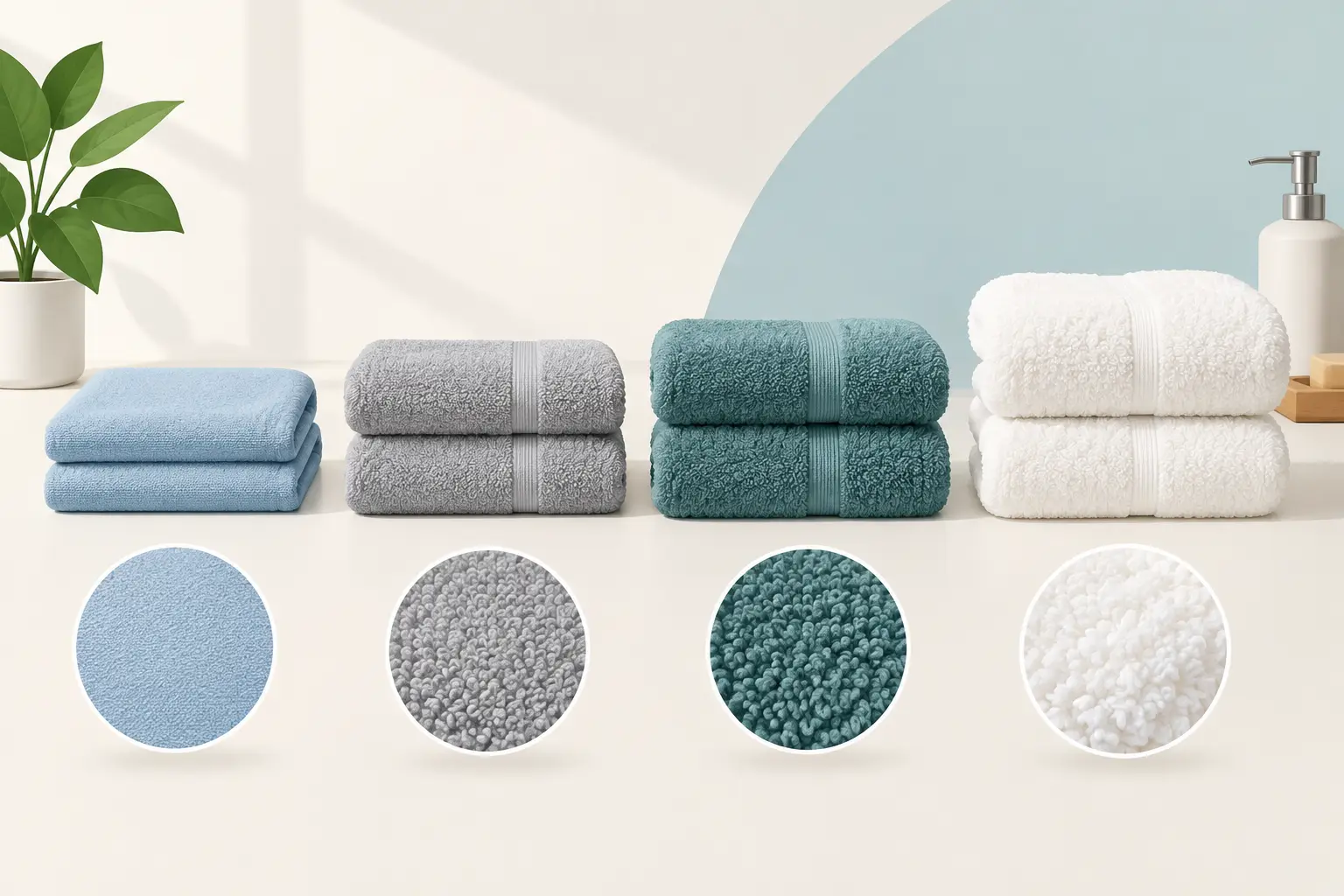
Guide to towel fabric weights by GSM range
Under 400 GSM: light, fast-drying towels
Towels below 400 GSM are usually thin and lightweight. They dry quickly, fold into a small space, and are easy to carry. This range works well for gym bags, travel, camping, pool use, kitchen cleanup, and guest bathrooms where towels may need to be washed often.
The trade-off is a less luxurious feel and lower absorbency per use. A lightweight towel can still do the job, but it may become saturated sooner after a shower. It is a practical pick when quick drying, compact storage, and easy laundry matter more than a thick feel.
400 to 600 GSM: the everyday sweet spot
For most households, 400 to 600 GSM offers the best balance. These towels generally feel soft and substantial without becoming overly slow to dry. They have enough density for regular bathing, but they are still manageable in a standard washer and dryer.
A towel around 500 GSM is often a dependable choice for family bathrooms, first apartments, guest rooms, and routine replacement purchases. It provides a hotel-style feel without requiring the drying time or storage space of an extra-heavy towel. If you want one versatile towel type for most uses, this is the range to start with.
600 to 800 GSM: plush and absorbent
Towels in the 600 to 800 GSM range are noticeably thicker and more cushioned. They hold more water, feel more substantial against the skin, and can create the spa-like experience many shoppers want in a primary bathroom.
That comfort comes with practical considerations. Dense towels take longer to air dry and may need a fuller dryer cycle. In a humid bathroom, a heavy towel left on a hook can stay damp long enough to develop an odor. These towels also occupy more room in linen closets and laundry loads. They are a good fit when softness and absorbency are the priority and your household has good drying space.
Over 800 GSM: extra-luxury weight
Towels above 800 GSM are very thick, dense, and often marketed as luxury or premium bath linens. They can feel exceptionally soft when new and absorb a great deal of water. They are best suited for shoppers who specifically want a heavy towel and do not mind added care.
For many homes, extra-high GSM is not automatically better. A very heavy towel may be inconvenient for children, older adults, frequent laundry days, or small washers. It can also take considerable time to dry completely. Choose this range for the experience, not because you assume it will always last longer.
GSM affects more than softness
Higher GSM usually contributes to absorbency because there is more fiber available to hold moisture. But absorbency is only one part of towel performance. A towel should also release moisture in the wash, dry within a reasonable time, and retain its texture after repeated use.
Drying time is where the difference becomes especially clear. A low-GSM towel may be ready to reuse quickly, while a dense towel can remain damp for much longer. If multiple people share a bathroom, or if towels are hung close together, a midweight towel can be the more hygienic and convenient option.
Durability also depends on construction. Long, loosely made loops can feel very soft at first but may snag more easily. Shorter, tightly woven loops often hold up better in busy homes. GSM measures density, not the quality of every detail that goes into the towel.
Check the fiber and weave before deciding
Cotton is popular for bath towels because it is naturally absorbent and comfortable. Standard cotton towels are practical for daily use, while ringspun cotton is often smoother because the yarn is spun from shorter fibers into a finer strand. Combed cotton has been processed to remove shorter fibers, which can improve softness and reduce lint.
Turkish cotton towels are often valued for a soft feel and a balance of absorbency and drying speed. Egyptian cotton is known for long fibers and a plush finish, though the country name alone does not guarantee quality. Read the fabric details rather than relying only on a label claim.
You may also see bamboo-derived rayon blended with cotton. These towels can feel silky, but blend ratios matter. A cotton-rich towel may offer better familiar bath-towel performance, while a blend can change the feel and care needs. Microfiber towels are a separate category: they dry fast and work well for travel, sports, or cleaning, but many people prefer cotton for everyday bathing.
Choose a towel weight for the room and routine
Think about where the towel will live after it is used. A compact apartment bathroom with limited airflow often benefits from a 400 to 600 GSM towel. It gives you comfortable daily performance without leaving a damp, heavy towel on the rack.
For a guest room, midweight towels are usually a safe choice. They look substantial, wash easily, and do not make guests wonder where to hang an oversized bath sheet. For a primary bathroom with roomy towel bars, reliable ventilation, and fewer people sharing space, a 600 GSM or higher towel can be a worthwhile comfort upgrade.
Families may prefer a mix instead of one uniform weight. Keep plush bath towels for adults who enjoy them, lighter towels for kids or sports, and a few fast-drying extras for busy laundry days. Buying for real routines is more useful than trying to make every towel feel like a resort towel.
How to make any towel perform better
New towels often have finishing treatments from manufacturing and packaging that can limit absorbency at first. Wash new towels before using them. Use a modest amount of detergent, and avoid fabric softener when possible. Softener can coat fibers over time, making towels feel slippery while reducing their ability to absorb water.
Do not overload the washer. Towels need room to move so detergent and soil can rinse out. Dry them promptly and fully, but avoid excessive high heat, which can weaken cotton fibers and make towels feel rough. If a towel starts smelling musty, wash it promptly rather than leaving it bundled in a hamper.
Wash towels separately from items with zippers, hooks, or rough hardware. This simple habit helps prevent pulled loops and keeps the fabric looking cleaner longer. Replacing a few worn towels as needed can also be more practical than waiting for the entire linen closet to wear out at once.
The practical buying decision
When comparing towels, start with GSM, then check the fiber content, dimensions, care instructions, and number of pieces included. A lower price on a very heavy towel is not always the better value if it is difficult to wash and dry in your home. Likewise, a lighter towel is not a compromise if its fast drying and easy storage match your routine.
For most shoppers, 450 to 600 GSM is the reliable middle ground: comfortable, absorbent, and practical for regular use. Choose a higher weight when you want extra plushness and can support the added drying time. Choose a lighter weight when convenience matters most. The best towel is the one that feels good, dries fully, and makes laundry day easier.