A towel can look plush in a product photo and still feel thin, shed heavily, or take forever to dry. Knowing how to buy towels online comes down to reading a few practical details before you check out: fiber, weight, size, construction, pack count, and final delivered price. Once you know what those details mean, you can shop for reliable towels without overpaying for a brand name or a warehouse-club membership.
Start With the Towel's Job
The best towel is not always the thickest or most expensive one. Start with where and how often it will be used. A primary bathroom needs absorbent bath towels that can handle daily showers and frequent washing. A guest bath may need a coordinated set that looks clean and feels comfortable without requiring premium weight. Kitchen towels, gym towels, beach towels, and cleaning towels each call for different features.
For an everyday household bath towel, the practical balance is softness, absorption, and reasonable drying time. Very heavy towels can feel luxurious, but they use more closet space, stay damp longer, and can be less convenient in humid homes or busy family bathrooms. Lighter towels dry faster and are easier to wash in larger loads, though the least expensive options may not feel as substantial.
Think about replacement needs, too. If several people use the same bathroom, buying matching extras makes laundry simpler. You can rotate towels while keeping the bathroom looking organized, rather than trying to match discontinued colors later.
How to Buy Towels Online: Read the Material First
Most bath towels are made with cotton, cotton blends, or microfiber. The fiber affects how a towel feels, absorbs water, and holds up after repeat washes.
Cotton for familiar everyday comfort
Cotton remains the standard choice for bath towels because it is absorbent, breathable, and comfortable against skin. Look for descriptions that clearly identify the cotton content instead of relying only on words such as “luxury” or “premium.” A 100% cotton towel is a dependable choice for most households.
Turkish cotton and Egyptian cotton are often associated with a softer feel and longer fibers. They can be excellent options, but the country or cotton type alone does not guarantee quality. Construction, towel weight, and finishing still matter. If the listing does not provide useful specifications, a familiar label is not enough reason to pay more.
Cotton blends for practical use
A cotton-polyester blend may be less plush than all-cotton, but it can dry more quickly and hold its shape well. These towels can make sense for guest bathrooms, rentals, dorms, salons, or homes where laundry moves constantly. The trade-off is that a higher synthetic content may feel less natural and can be less absorbent than cotton.
Microfiber for specific tasks
Microfiber is useful for cleaning, travel, workouts, and quick-dry situations. It is not usually the first choice for a classic bath towel feel, but it can be compact and highly practical. Check whether the product is intended for body drying or utility cleaning before adding it to your cart.
Use GSM to Compare Thickness and Absorbency
GSM means grams per square meter. It is one of the most useful product specifications when comparing towels online because it indicates fabric density. It does not tell you everything, but it gives you a more meaningful comparison than a photo alone.
Towels around 300 to 400 GSM are generally lightweight. They are easier to pack, quicker to dry, and well suited to gyms, travel, pool use, or backup bathroom towels. Towels in the 400 to 600 GSM range often provide a good middle ground for daily household use: absorbent enough for regular bathing without being overly bulky.
Towels above 600 GSM tend to be thicker and plusher. They can be a good fit when a spa-like feel matters most, but expect longer drying times and a higher price. For many budget-conscious households, a well-made midweight towel offers better long-term value than an oversized, extra-heavy option that is difficult to wash and dry.
If GSM is not listed, look for other concrete information, such as towel weight, material percentage, or customer feedback about thickness. Be cautious when a listing makes broad quality claims but provides no usable specifications.
Check Size, Not Just the Product Name
“Bath towel” is not a standard size across every seller. Before purchasing, check the stated dimensions. A towel that sounds like a regular bath towel may be smaller than what you use now, while an oversized bath sheet may be too large for your towel bar, washer, or storage shelf.
A typical bath towel is often around 27 by 52 inches, though dimensions vary. Hand towels and washcloths should also be reviewed individually, especially when purchasing a set. A set may include several pieces, but it might have only two bath towels along with hand towels and washcloths. That can be a good value if you need the full assortment, but not if your real need is four replacement bath towels.
Measure your current favorite towel if you are unsure. It takes less than a minute and gives you a useful reference point when comparing listings. Also consider who will use the towels. Taller adults may prefer longer towels, while compact towels can be easier for children to handle and hang up.
Look at Construction Details That Affect Wear
Online photos cannot show every detail, so product descriptions matter. Pay attention to the edges, loops, and weave. Double-stitched hems generally help towels resist fraying over time. A dense, even pile is often a better sign than a decorative border that does little for performance.
Avoid assuming that an extra-soft towel will stay that way forever. Some towels feel especially soft out of the package because of finishing treatments, then change after the first few washes. Proper care helps, but construction and fiber quality have the biggest effect on durability.
For towels that will see heavy use, simple designs often work best. Decorative trims can look appealing, but they may shrink differently or wear faster than the towel body. A clean, hotel-style towel is easy to coordinate, practical to replace, and suitable for most bathrooms.
Compare the Real Price Per Towel
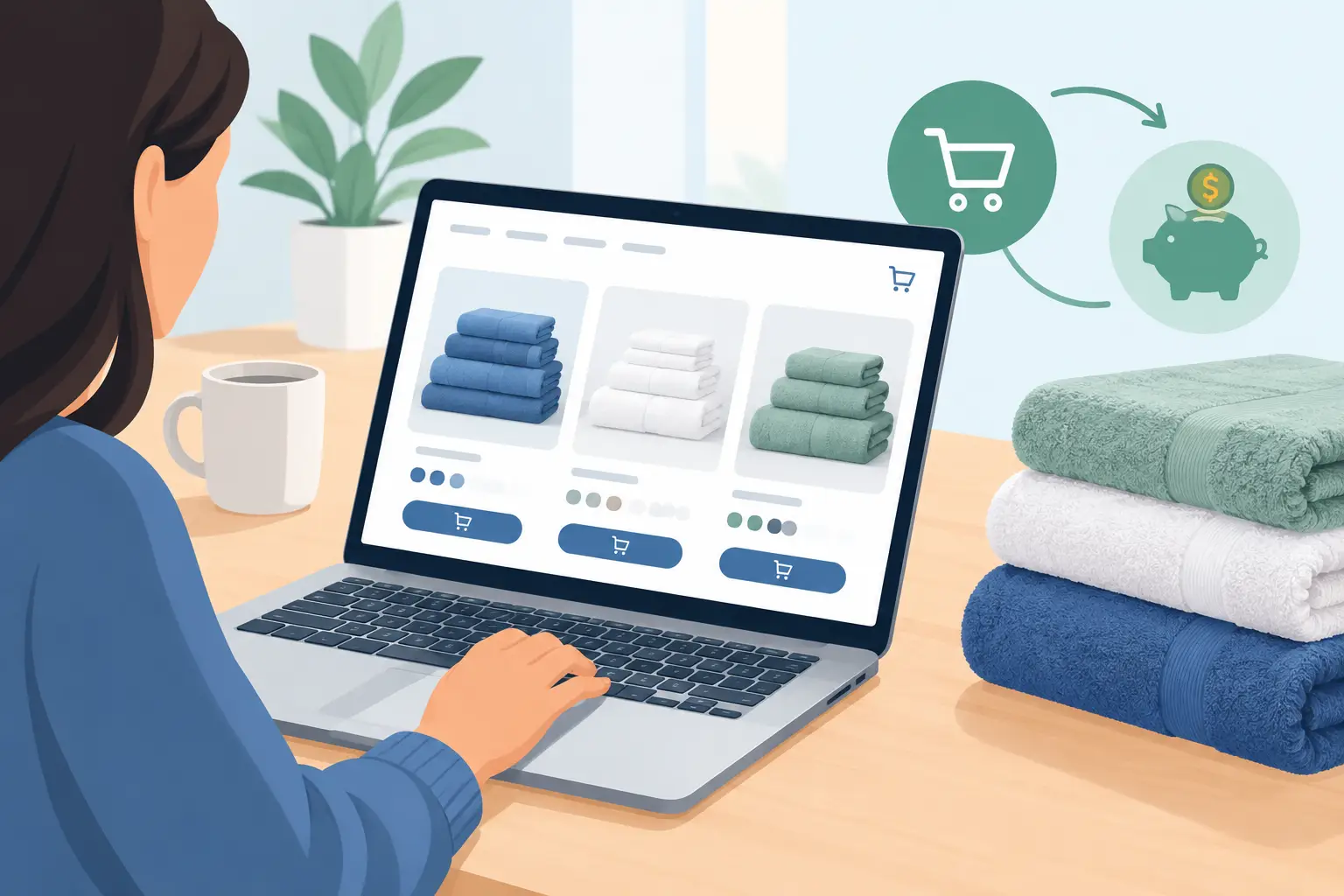
The lowest sticker price is not always the best deal. Compare similar towels by piece count, dimensions, material, and delivered cost. A low-priced set may look attractive until shipping charges are added, or it may include more washcloths than bath towels. Read the package contents carefully.
Free shipping matters most on useful household basics because it keeps the final price clear. It also makes it easier to order the quantity you actually need instead of adding unrelated items just to reach a shipping threshold. At The Sale Central, free shipping on every order supports straightforward price comparison when restocking practical home essentials.
Buying a small matching set can be more economical than replacing one towel at a time, particularly for a new apartment, a guest room, or a household refresh. Still, do not buy a large quantity solely because the per-piece price looks lower. Towels take up space, colors may not suit your bathroom, and an untested product is better purchased in a manageable quantity first.
Choose Colors With Laundry in Mind
White towels offer a clean hotel-inspired look and can be easier to brighten when cared for correctly. They are a practical option for guest spaces and homes that prefer a uniform, easy-to-replace look. The downside is that makeup, hair dye, and certain stains can show quickly.
Darker shades hide everyday marks better but may fade over time, especially if washed in hot water or with harsh products. Medium neutrals often provide the easiest balance. If you are replacing towels gradually, choose a color that will remain easy to find rather than a highly specific seasonal shade.
When reviewing colors online, remember that screens can vary. Product photos are useful for a general impression, not an exact paint-chip match. If coordinating with a bathroom theme matters, choose a flexible neutral or order a smaller set before committing to a full linen closet refresh.
Review Seller Details Before Checkout
A clear product listing should state what is included, provide material and size information, and show the final price before payment. Look for stock availability and delivery details, especially if towels are needed for guests, a move, or a replacement after a household refresh.
For repeat household purchases, an account can save time by keeping order information available when you need to reorder matching towels or other essentials. Secure card and PayPal checkout options also help make online ordering more straightforward. The goal is not to spend hours researching a towel. It is to have enough information to make a confident, useful purchase.
Wash New Towels Before Using Them
New towels should usually be washed before first use. This helps remove packaging residue and can improve initial absorbency. Follow the care label, avoid using too much detergent, and go easy on fabric softener. Excess softener can coat cotton fibers and reduce the towel's ability to absorb water.
If a new towel sheds a little during the first wash or two, that is common. Persistent shedding, loose seams, or poor absorbency are different concerns and are reasons to review the product details and seller policies before buying.
A good online towel purchase should make daily routines easier, not create another item to second-guess. Choose the material and weight that fit your household, confirm the actual size and set contents, and focus on the delivered value. The right towels are the ones that feel dependable after laundry day, not just impressive in the listing photo.