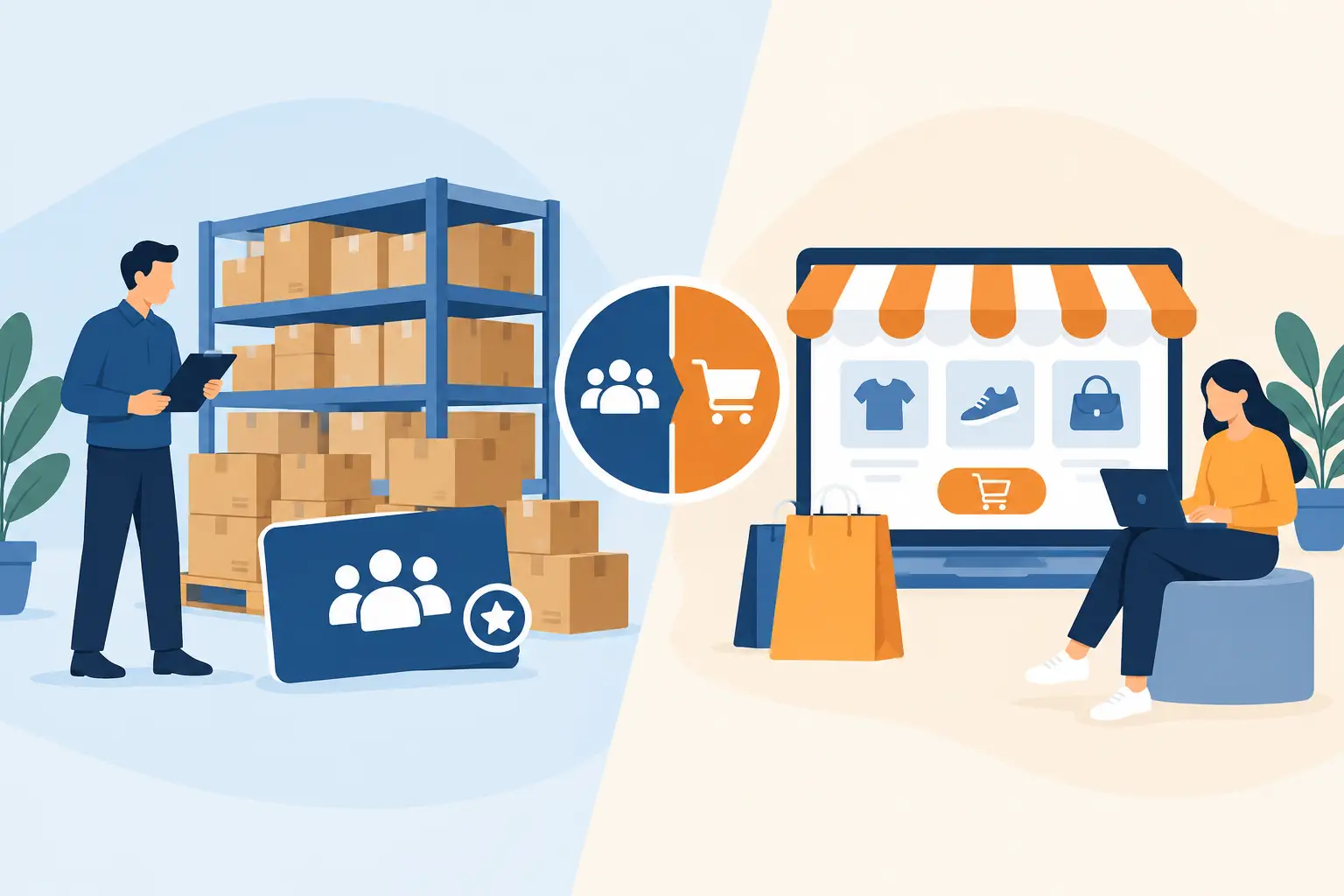
A membership club can look like the obvious place to save on household basics. But wholesale memberships versus online stores is not simply a question of which price tag is lower. The better choice depends on what you buy, how much you need, whether you will pay an annual fee, and what it takes to get the order home.
For many shoppers, the best value is not the largest package or the biggest advertised discount. It is getting useful products at a fair price, without extra fees, crowded aisles, oversized quantities, or shipping costs that appear at checkout.
The Real Cost of a Wholesale Membership
Traditional wholesale clubs often offer strong pricing on bulk merchandise. If your household regularly uses large quantities of paper goods, pantry staples, cleaning supplies, or seasonal items, those prices can make sense. The catch is that access usually starts with a yearly membership fee.
That fee changes the calculation. A shopper who visits often and buys enough qualifying products may recover the cost quickly. A shopper who only needs a few pillows, towels, oral-care items, or utility supplies throughout the year may not. The savings have to exceed the membership price before the membership becomes a true deal.
There is also the question of buying more than you need. A 24-count package may have a low unit price, but it still costs more upfront than a smaller pack. It also takes up storage space. Bulk buying works best when products are used consistently, have a long shelf life, and fit your budget at the time of purchase.
A low per-unit price is useful. It is not the only number that matters.
Wholesale Memberships Versus Online Stores: What Changes?
An online discount store can provide wholesale-oriented value without requiring shoppers to commit to a club fee or a large cart. Instead of planning a warehouse trip, customers can order the items they need and have them delivered.
The biggest differences generally come down to access, quantity, delivery, and shopping time. Membership clubs may reward frequent bulk purchasers, while online stores can be a better fit for households that want flexibility and a simpler path to checkout.
Membership fees and account requirements
With a wholesale club, a paid membership is commonly required before shoppers can access the full catalog or in-store pricing. Some clubs also limit certain services, promotions, or shopping hours by membership level.
Online stores vary, but many let customers shop without an annual fee. That makes it easier to purchase when a need comes up rather than trying to justify a yearly commitment. Creating an account can still be useful for order history, saved details, and faster reordering, but it should support convenience rather than create a barrier to buying.
Quantity and storage
Warehouse clubs are built around large pack sizes. That can be practical for big families, shared households, offices, or shoppers who know they will use every item. It can be less practical for a smaller household, apartment living, or a shopper who wants to try a product before stocking up.
Online discount retailers often offer more room to choose. You may still find multipacks and value quantities, but you can focus on the amount that matches your immediate needs. This is especially helpful for products that are seasonal, occasionally used, or difficult to store in large boxes.
Shipping, travel, and total checkout cost
A warehouse purchase may involve a drive, parking, time in the store, and the effort of loading and unloading bulky items. Those costs do not show up on a receipt, but they affect the overall shopping experience.
Online shopping saves the trip, but shoppers should watch shipping charges closely. A low item price becomes less appealing when shipping is added at the last step. Free shipping on every order makes the total easier to understand before you buy and removes one of the most common online-shopping surprises.
Selection and decision fatigue
Big warehouse clubs can carry excellent products, but their inventory changes frequently and their aisles are designed for broad, high-volume shopping. You may go in for towels and leave comparing televisions, snack pallets, and patio furniture.
A curated online catalog can reduce that friction. When household, outdoor, health, beauty, and utility essentials are organized by need, shoppers can compare practical options without sorting through thousands of unrelated listings. A smaller, more focused selection is not a drawback when it helps you find the right item faster.
When a Wholesale Membership Makes Sense
A warehouse membership can still be worthwhile under the right conditions. It may be a good fit if you buy high-volume items regularly, have room to store them, and already use the club for services or purchases that offset the annual fee.
It can also work well for shoppers who prefer inspecting products in person or making one large monthly stock-up trip. If the club consistently carries the exact brands and quantities your household uses, its bulk pricing may be hard to beat.
The key is to judge the membership by your actual spending habits, not by a single impressive price sign. Check how much you spent there last year, how much product went unused, and whether you made extra purchases just because you were already in the store.
When an Online Store Is the Better Value
An online store is often the practical choice when you need dependable everyday merchandise without a membership charge or a bulk-buying commitment. It is particularly useful for replacing home textiles, picking up personal-care essentials, or ordering utility items when the need arises.
For example, a household may need new hotel-style pillows but not a warehouse-sized bundle. Another shopper may want refillable lighters, anti-microbial scissors, or oral-health products without adding unrelated items just to make a trip feel worthwhile. Ordering online lets the purchase stay focused.
The Sale Central is designed around this type of purchase: wholesale-style pricing for individual shoppers, free shipping on all orders, secure payment options, and account tools that make repeat purchases easier. The goal is straightforward: buy useful products at a value price without paying to gain access.
Compare the Cart, Not Just the Price Tag
Before choosing where to buy, compare the full cost of the specific products you need. A quick check can prevent a deal from becoming an expensive errand.
Consider these four questions:
- Is there an annual membership fee, and will your planned purchases realistically cover it?
- Do you need the full bulk quantity, or will part of it sit unused in a closet or garage?
- What will delivery, sales tax, gas, and travel time add to the order?
- Can you reorder the same item easily when it is time to replenish it?
This comparison is most useful when you use the final total, not a unit-price claim alone. A bulk package can win on price per item while losing on upfront cost, waste, storage, and convenience. A smaller online order can cost slightly more per unit while saving money overall because there is no fee, no unnecessary quantity, and no delivery charge.
Make Your Shopping Routine Fit Your Household
There is no single winner for every household. Wholesale memberships are built for frequent bulk purchasing. Online stores are built for accessibility, targeted orders, and delivery convenience. Many shoppers use both, reserving warehouse trips for the few products they buy in large volume and ordering the rest online as needs arise.
The most dependable savings come from buying the right amount at a clear total price. Start with what your household will actually use this month, choose a retailer that makes the cost easy to understand, and keep reordering simple when the essentials run low.